One sensor.Every axis of every lift.
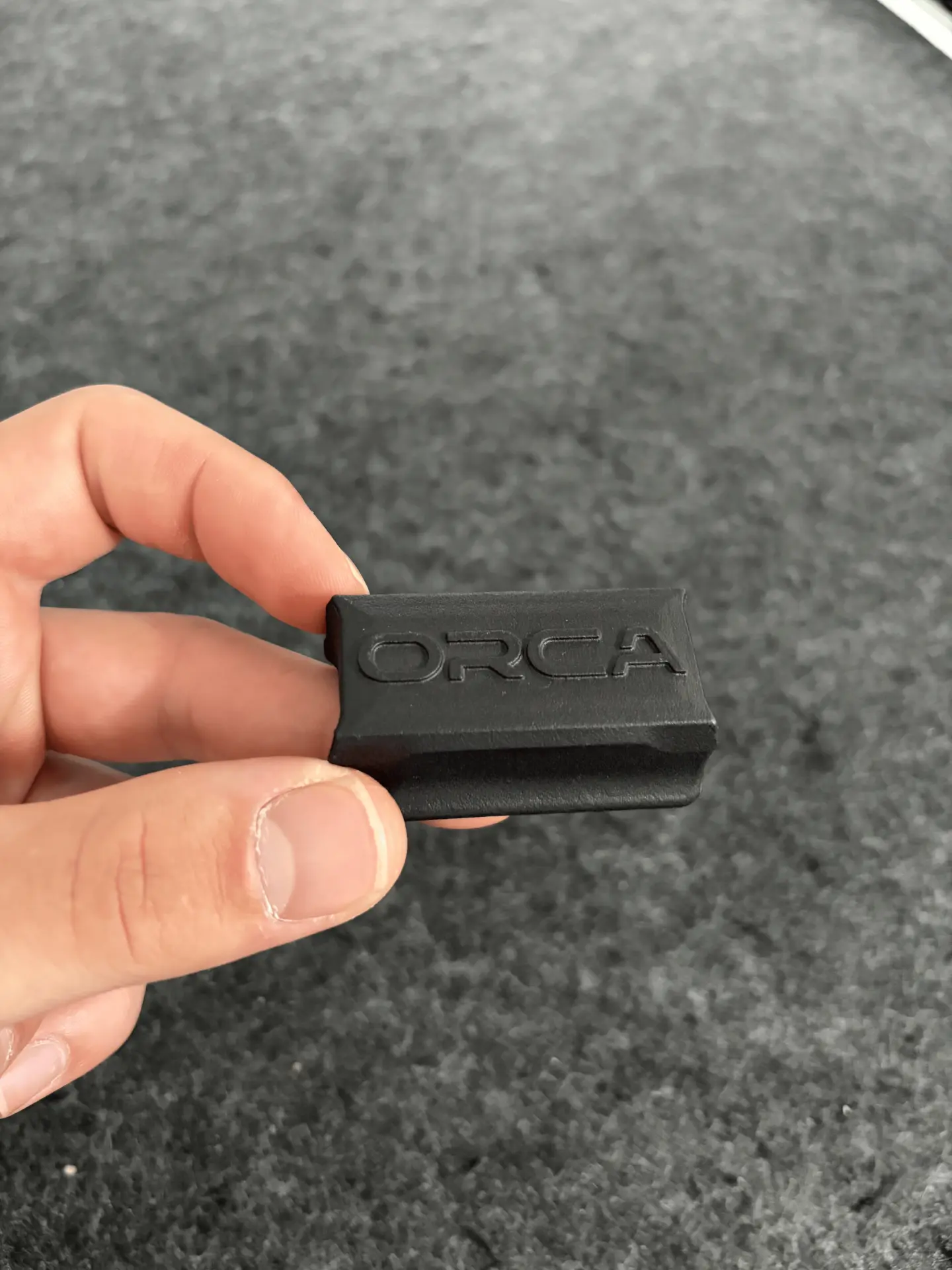
Untethered, pocket-sized, and honest to every axis of the bar. The precision-sintered PA-12 nylon case houses two research-grade IMUs that sample at 200 Hz and resolve velocity to three decimals in m/s. Snap it on, lift, and read what the bar actually did, not what a straight-line approximation says it should have done.
The numbers that matter. Click any tile.
Six axes. One honest rep.
Bars don't move in a straight line. Tethered tools pretend they do, and quietly filter out everything else. ORCA reconstructs the true 3D path of every rep, so your velocity stays honest when the bar drifts forward, tilts or rotates.Read why a cable tether lies to you.
VBT only works if you can trust it, everywhere, on every lift.
A number you cannot trust is worse than no number at all. If the tool only works on one bar, in one rack, on a handful of exercises, it is not a training system, it is a demo. ORCA is built to give you data you can act on for squats, pulls, presses, olympic lifts, cable work and jumps, without changing the setup between movements.
Just as important, VBT should never become a brake on your training. Snap the sensor on, open the app, lift. No calibration rituals, no laptops on the platform, no certification required to read the screen. The numbers are presented so an athlete can act on them mid-session and a coach can trust them at a glance.
Why athletes and coaches switch.
Accuracy is what makes VBT worth doing at all. If your velocity number drifts from rep to rep or from set to set, every prescription downstream is guesswork. This is the row that separates real training data from a rough estimate.
Setup time decides whether VBT actually happens on the gym floor or stays a nice idea in a spreadsheet. If mounting takes five minutes between sets, athletes will quietly stop using it, and the data stops being useful.
Real programs are not just back squat and bench. Cable work, jumps, sled pushes and dumbbell variations all deserve the same quality of data. A device that only measures a straight vertical bar path locks you out of most of your programming.
Longitudinal data is only useful if every session was measured the same way. Environmental drift, camera angle changes, or a cable that was clipped an inch off will silently poison months of tracking without ever throwing an error.
The best sensor is the one that follows the athlete. Travel, satellite gyms, home setups, competition warm-ups. If measuring velocity requires a full case and a dedicated rack, most of an athlete's real training goes unmeasured.
High-performance athletes dedicate their lives to perfecting every detail and metric of their training. The measuring equipment they trust should reflect that same standard. If your data is unusable, why buy it in the first place?
Tap any row to reveal the full breakdown
Every sensor ships ready to lift.
Every ORCA comes with its full mounting kit. The magnetic hold takes care of standard barbells. For non-magnetic bars, and for the most violent lifts, the strap mount takes over.
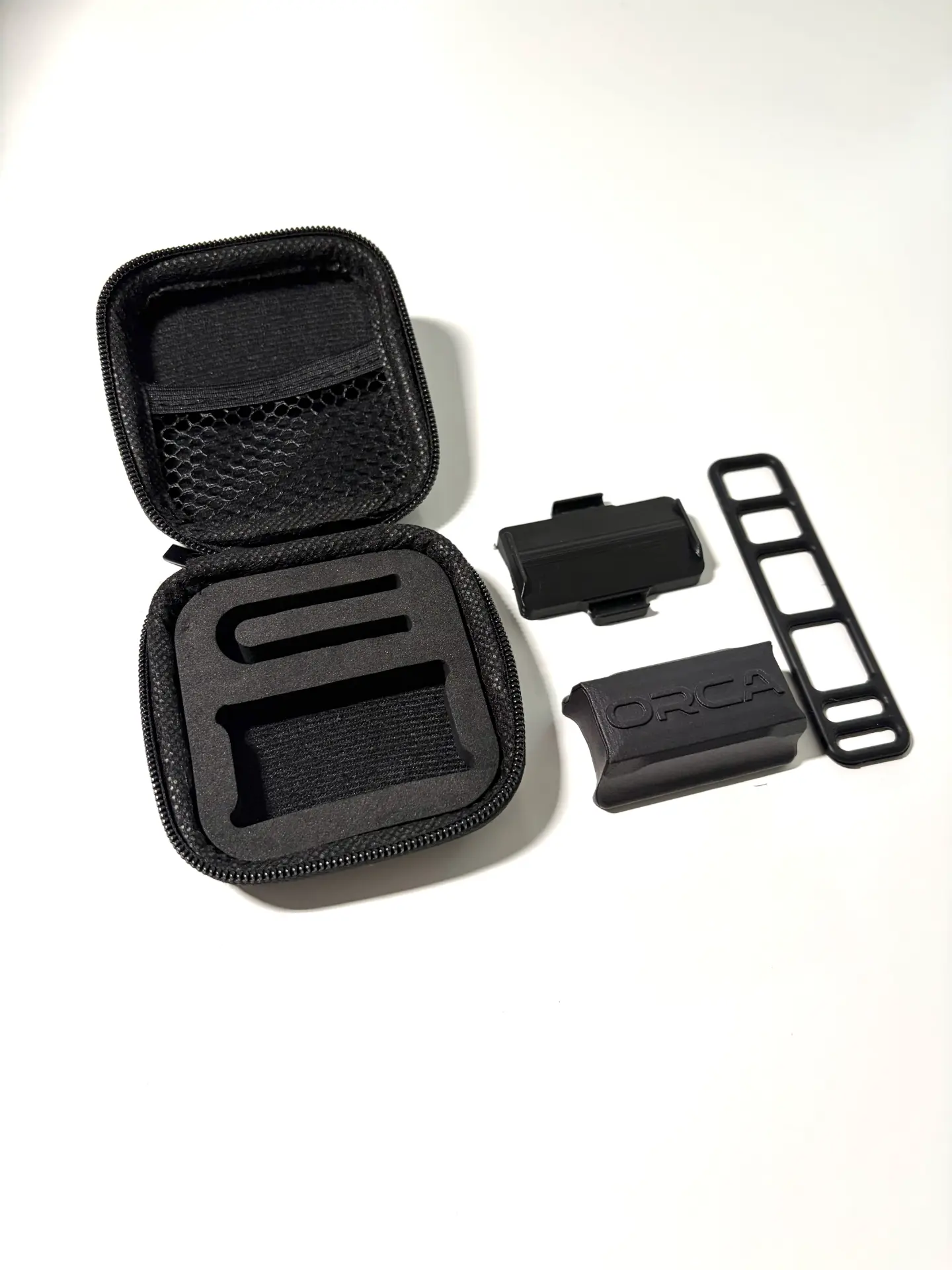
Protect your investment.
From a single-athlete carry case to a full multi-sensor rugged deployment case, every ORCA has a home.
Soft carry case
Semi-rigid EVA carry case that holds the sensor and adapters. Light, quiet, gym-bag friendly.
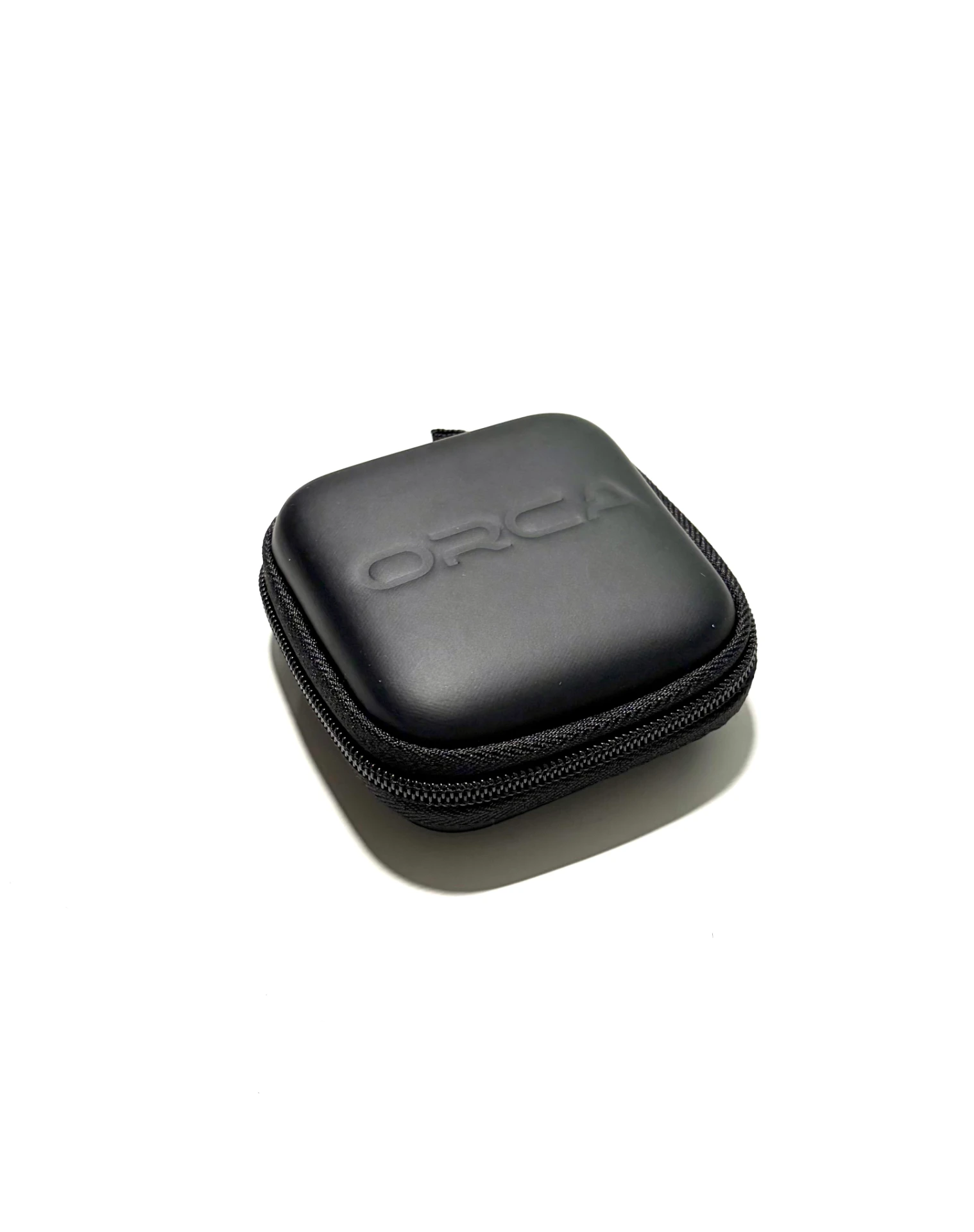
Semi-rigid EVA shell, zipped closure.
- Fits the ORCA sensor and full adapter kit.
- Lightweight EVA foam shell resists crushing in a packed gym bag.
- Laser-cut foam insert secures every piece in its slot.
Dual rigid case
Foam-lined rigid case built for two sensors and every accessory. Ships standard with the dual bundle, and available as a rigid upgrade on single units.
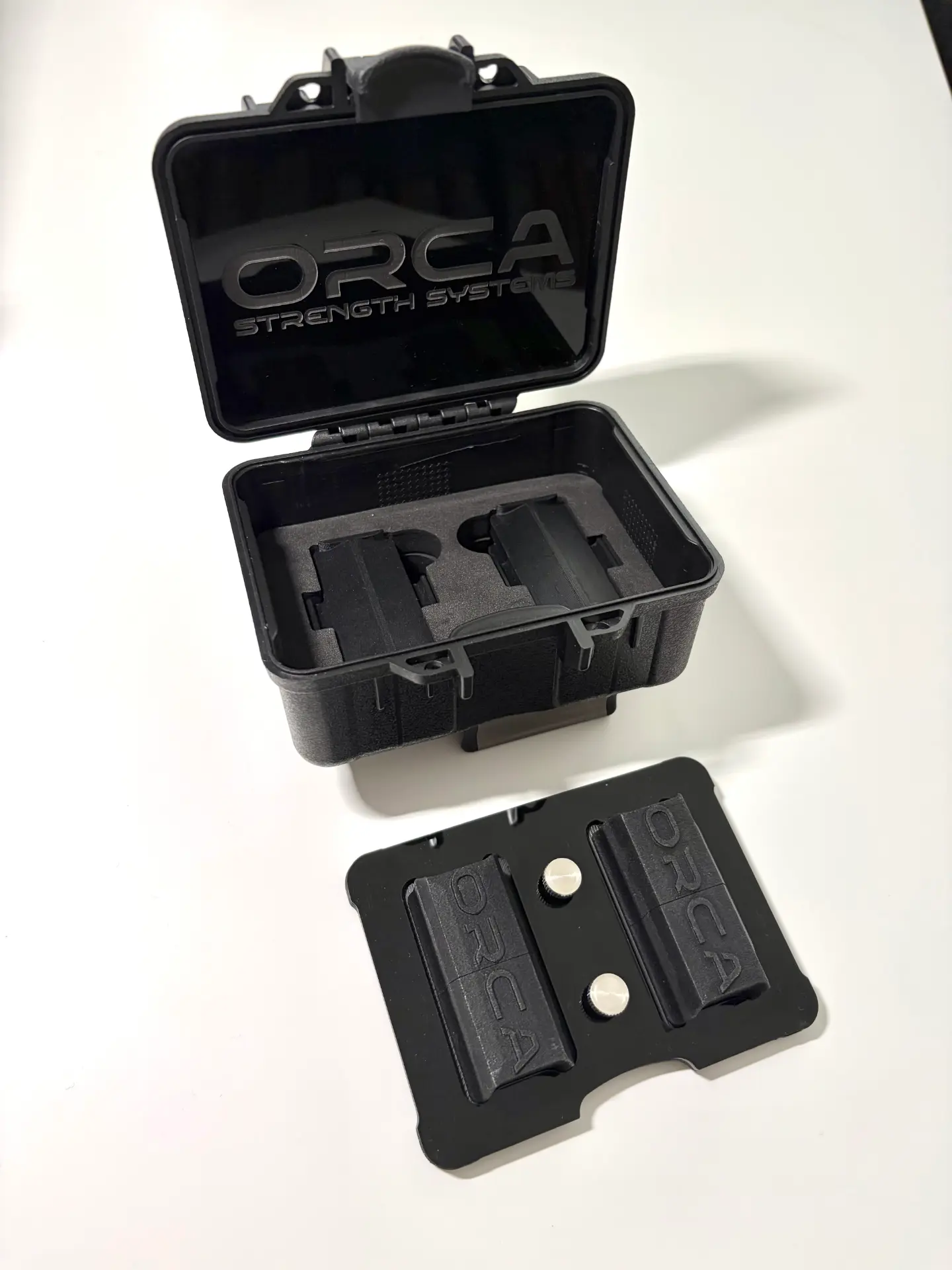
Custom foam cut for two sensors and adapters.
- Precision foam cutouts for two ORCA sensors and every adapter.
- Magnetic securing keeps each sensor locked against the foam during travel.
- Dedicated foam insert cradles every cable, strap and adapter accessory.
- Rigid shell protects the electronics from drops and travel.
- Ships standard with the dual bundle. Optional upgrade on single units.
Multi-sensor rugged case
Heavy-duty case for team deployments. Built to travel and live on the gym floor. Optional in-case charging keeps the entire roster ready between sessions.
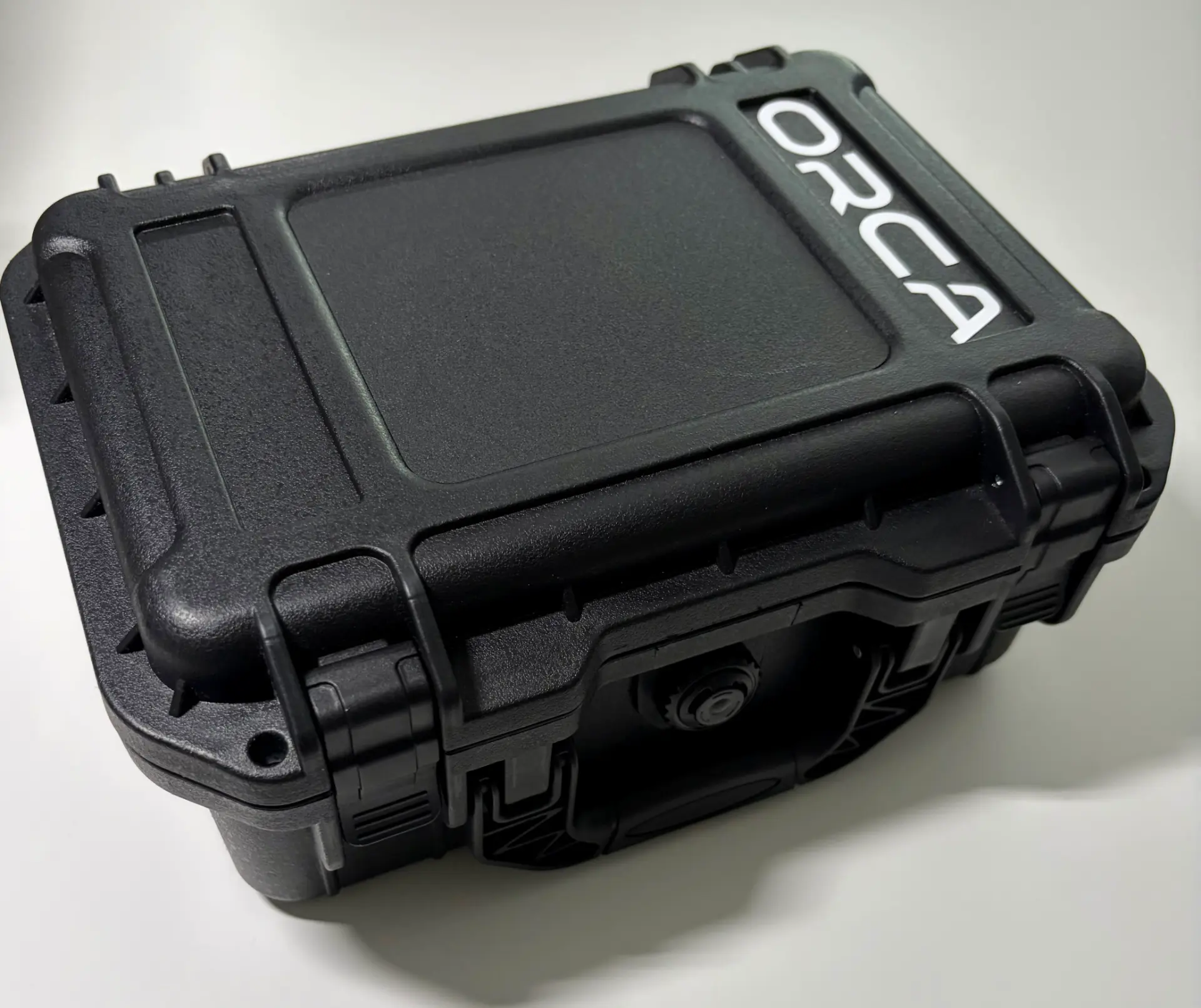
Rugged exterior, checked-baggage friendly.
- Configurable for 4 to 12 sensors with dedicated foam cutouts.
- Optional in-case charging keeps the entire roster session-ready.
- Logo customization and roster labeling available in the team quote.
Scroll the thumbnails to browse each case
Every detail, on the record.
The engineering decisions behind these numbers are documented in the Science and data section.
- Sensor technology
- MEMS IMU (Micro-Electro-Mechanical System Inertial Measurement Unit)
- IMU configuration
- Dual research-grade 6-axis (accelerometer + gyroscope)
- Output sample rate
- 200 samples / second
- Internal oversampling
- 32 kHz per IMU, decimated with anti-aliasing
- Sensor fusion
- On-device Kalman filter, hardware-synced
- Timestamp precision
- Sub-millisecond, dual-IMU locked
- Motion tracking
- True 3D bar path, quaternion-based orientation
- Dynamic range
- ±16 g accelerometer, ±2000 dps gyroscope
- Metrics
- Peak & mean velocity, ROM, power, acceleration, bar path
- Weight
- 38 g
- Mount
- 4× N52 rare-earth magnets · 200 N pulling force · 16 N52 total in the kit
- Housing
- Precision-sintered PA-12 nylon
- Water & dust
- IP54, sweat & chalk resistant
- Wireless
- Bluetooth Low Energy 5.0 · 2M PHY · Enhanced Data Rate
- Battery life
- 730 days standby · 24 hours continuous training
- Charging
- USB-C, ~90 min full charge (cable not included)
- Firmware
- Auto-updates via Bluetooth through the ORCA app
- ORCA app
- iOS 26+ · Android coming soon
- Exports
- CSV, PDF, coach-share links
- Team tools
- Multi-sensor pairing, roster sync, longitudinal exports
The details you asked for.
Research-grade sensing.At a price athletes can actually afford.
32 kHz internal sampling. On-device Kalman fusion. Sub-millisecond dual-IMU sync. Pick a single unit, a dual kit, or a full team deployment.